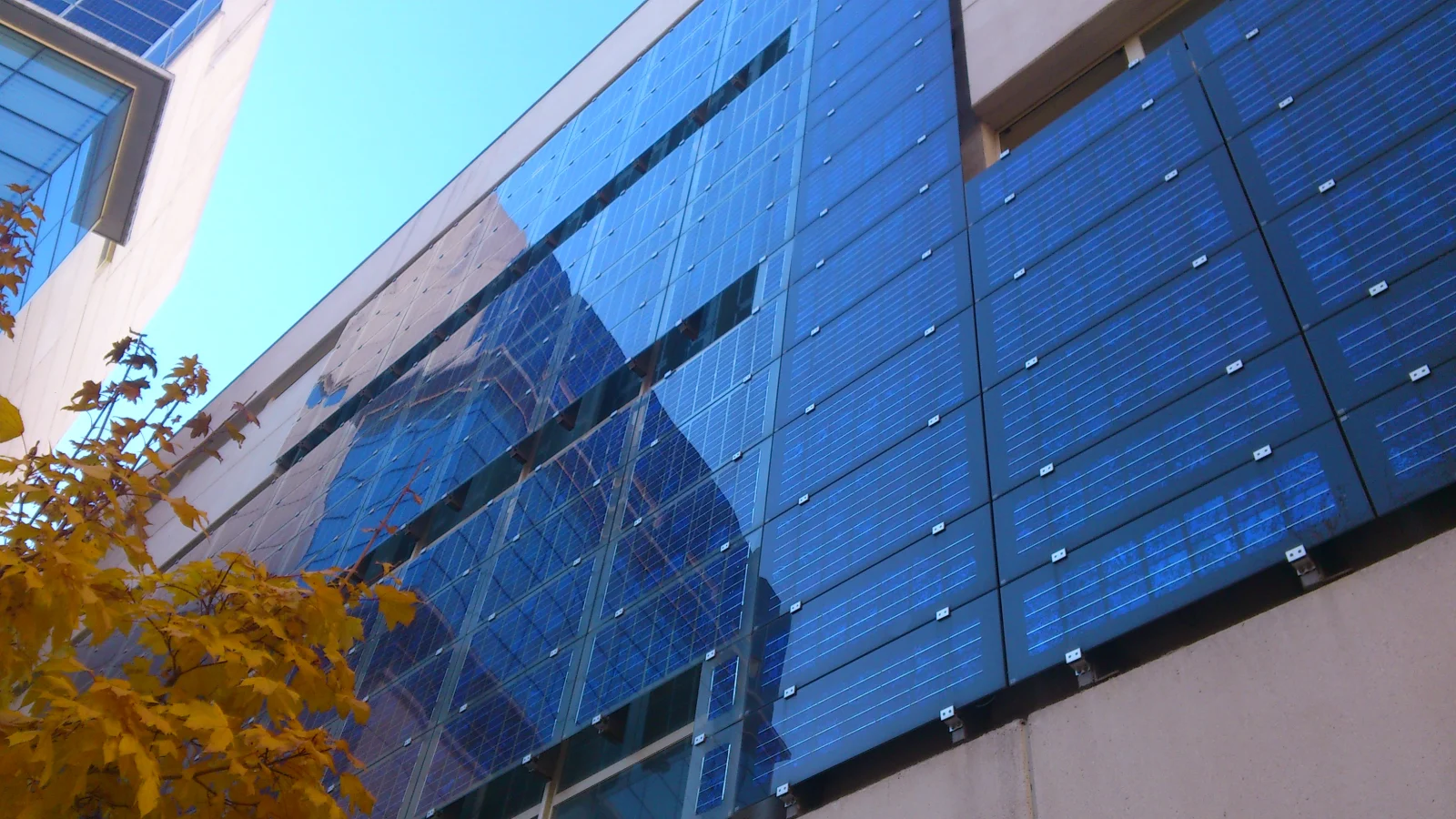
The revised European directive makes the zero-emission building the new standard. New buildings owned by public bodies must comply from 2028, while all other new buildings must comply from 2030.
The standard requires very high energy performance and no on-site carbon emissions from fossil fuels. New buildings must also be solar-ready so that photovoltaic or solar-thermal installations can be integrated.
Design begins with demand
Orientation, shading, the envelope, ventilation, thermal bridges and solar control determine how much energy a building requires. Technology added at the end cannot fully correct inefficient architecture.
The roof becomes infrastructure
Photovoltaics, solar thermal systems, maintenance, drainage and equipment must be coordinated from the first design stages. A solar-ready roof needs defined space, access, structure and technical routes.
Value will be measured over the life cycle
Developers and owners will need to look beyond construction cost. Consumption, comfort, maintenance, climate adaptation and embodied emissions will increasingly influence finance, permits and market value.
Sources
- European Commission — Zero-emission buildings
- European Commission — Energy Performance of Buildings Directive
Photograph: Hanjin / Wikimedia Commons · CC BY-SA 3.0